
Basements are one of the most common areas where humidity problems occur. Because they are located below ground level or partially below ground, basements are more exposed to moisture from soil, walls, floors, poor ventilation, and temperature differences.
When moisture builds up in a basement, the space may feel damp, uncomfortable, and difficult to use. In some buildings, high humidity may also affect stored items, furniture, interior finishes, and building materials.
A proper basement dehumidification solution helps keep the space drier, more comfortable, and more stable for long-term use.
Basement humidity is usually caused by several factors working together.
Basements are close to soil and underground structures. Moisture can enter through walls, floors, cracks, or poorly sealed areas.
Many basements have limited windows or poor natural ventilation. Without enough air movement, moisture can remain trapped inside.
Basement surfaces are often cooler than indoor air. When warm humid air contacts cooler surfaces, condensation may occur.
Some basements include laundry rooms, utility rooms, water heaters, or storage areas. These uses may add moisture to the environment.
In humid climates, basement moisture can become worse during rainy seasons or hot humid weather.
If basement humidity is not controlled, homeowners and building managers may experience:
For residential buildings, basement humidity can also affect the overall indoor air environment if air moves from the basement to upper floors.
Ventilation can help in some basement applications, but it is not always enough. If outdoor air is humid, bringing more outside air into the basement may increase moisture instead of reducing it.
A dehumidifier directly removes moisture from indoor air. For basements, dehumidification is often more reliable than relying only on ventilation, especially in humid climates or underground spaces.
In many cases, the best solution may combine:
A suitable basement dehumidifier should be selected based on room size, humidity level, installation method, and usage requirements.
Important features include:
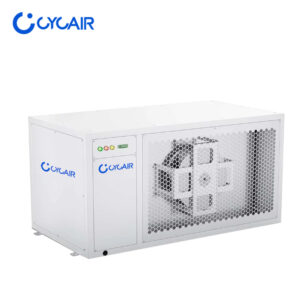
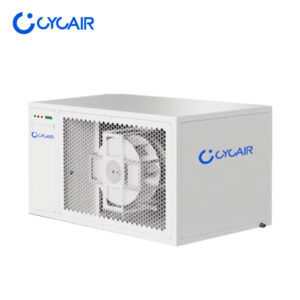
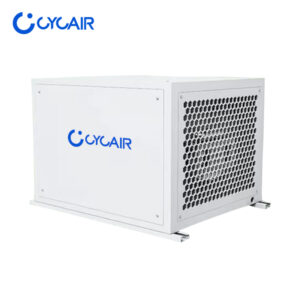
For homes where visible equipment is not preferred, a ceiling-mounted dehumidifier can be a cleaner and more integrated solution.
There are two common choices for residential basement dehumidification: portable dehumidifiers and ceiling-mounted dehumidifiers.
Portable dehumidifiers are flexible and easy to move. They are suitable for temporary moisture control, small basements, garages, storage rooms, and spaces where installation work is limited.
They are usually easy to operate and can be moved between different rooms.
Ceiling-mounted dehumidifiers are more suitable for long-term basement humidity control. They save floor space, support concealed installation, and can connect to drainage pipes.
This is useful when the basement is used as a living area, storage area, gym, entertainment room, or finished basement.
A basement dehumidification system should consider:
The right solution should make the basement easier to use while keeping the space clean and comfortable.
For basement dehumidification, Cycair offers several product options.
For flexible use, DP-A to DP-F Series Portable and Mobile Dehumidifiers can be used in basements, garages, storage rooms, laundry rooms, and small commercial areas.
For concealed residential basement applications, DCM-A26L to DCM-A138L Residential Ceiling Mounted Dehumidifiers are suitable for homes, villas, finished basements, storage rooms, and garages where floor space needs to be saved.
For larger underground or building spaces, higher-capacity solutions such as DMC-A Series Floor Standing Industrial Dehumidifiers or larger DCM-A Series Ceiling Mounted Dehumidifiers can be considered based on the project requirements.
Basement dehumidification solutions are suitable for:
The best product depends on whether the customer needs a mobile unit, a concealed ceiling-mounted system, or a higher-capacity solution.
The ideal target depends on the building and climate, but most basements need stable humidity control to reduce dampness and improve comfort.
For small or temporary basement humidity problems, a portable dehumidifier may be enough. For long-term or finished basement applications, a ceiling-mounted dehumidifier may provide a cleaner and more stable solution.
Continuous drainage is recommended for long-term operation because it reduces the need to empty a water tank manually.
If you are planning humidity control for a basement, underground room, or residential building, Cycair can help recommend a suitable dehumidification solution.
Share your basement size, humidity problem, installation preference, and drainage condition, and our team can help select the right portable or ceiling-mounted dehumidifier.