
Basements are often affected by moisture, poor airflow, and stale indoor air. Because basements are partly or fully below ground level, they usually have less natural ventilation and are more exposed to ground moisture than rooms above ground.
A basement may need ventilation, dehumidification, or both. Ventilation helps exchange air, while dehumidification removes moisture from indoor air. Understanding the difference is important when choosing the right solution.
A well-designed basement air control system can make the space drier, cleaner, and more comfortable for storage, living, working, or utility use.
Basement problems are often caused by a combination of poor airflow and high humidity.
Poor airflow can make the air feel stale and trapped. High humidity can make the basement feel damp and uncomfortable. When both problems exist, the basement may develop musty odors, condensation, and poor indoor conditions.
A basement air control plan should consider both air movement and moisture removal.
Basements often feel damp because moisture can enter from walls, floors, outdoor air, or indoor activities.
Poor airflow and high humidity can create a musty smell, especially in enclosed basement spaces.
Some basements have limited windows or no direct outdoor ventilation. Air may stay trapped in corners or storage areas.
When warm humid air contacts cooler basement surfaces, condensation may appear on walls, pipes, windows, or floors.
Basements are commonly used for storage. High humidity can affect cartons, furniture, documents, tools, clothing, and other stored items.
Ventilation and dehumidification are related, but they are not the same.
Ventilation moves air in or out of the basement. It can help remove stale air, odors, and pollutants. Ventilation may include fresh air supply, exhaust fans, or ducted ventilation systems.
Dehumidification removes water vapor from the indoor air. A dehumidifier directly lowers indoor moisture levels and helps maintain a more stable humidity range.
In some basements, ventilation is enough to improve air quality. In humid basements, dehumidification is usually needed to control moisture.
Basement ventilation is useful when the space has stale air, odors, poor airflow, or limited air exchange.
Ventilation may be needed for:
Ventilation equipment can help move stale air out and bring fresh air in. However, fresh air supply should be carefully managed in humid climates.
A basement dehumidifier is needed when the main problem is moisture.
Signs that dehumidification may be required include:
If outdoor air is humid, increasing ventilation may introduce more moisture. In this case, dehumidification is more effective.
Many basements benefit from a combined strategy.
A good basement solution may include:
Ventilation improves air exchange, while dehumidification stabilizes moisture levels. Together, they can create a better underground environment.
Basement equipment should be selected based on space size, humidity level, room use, installation preference, and drainage condition.
Important requirements include:
Finished basements may prefer concealed ceiling mounted equipment, while unfinished basements may use portable dehumidifiers.
For basement dehumidification, Cycair offers DP-A to DP-F Series Portable Dehumidifiers for flexible moisture control in basements, garages, storage rooms, laundry rooms, and utility spaces.
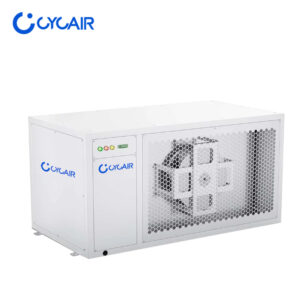
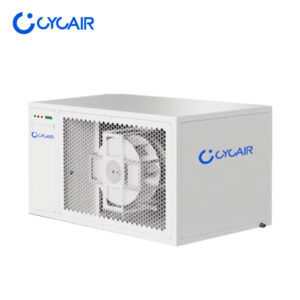
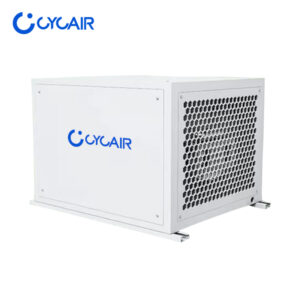
For long-term concealed basement humidity control, DCM-A26L to DCM-A138L Residential Ceiling Mounted Dehumidifiers can be considered. These models are suitable for homes, villas, finished basements, storage rooms, and garages where floor space and clean appearance are important.
For larger basement or underground building areas, DMC-A Series Floor Standing Industrial Dehumidifiers or larger DCM-A Series Ceiling Mounted Dehumidifiers can be selected according to project scale.
For basement ventilation, Cycair provides Linx Series Inline Fans, Hipher Series Centrifugal Inline Fans, Centriline Series Ceiling Mounted Exhaust Fans, and CYCSFP FA Series Filtered Fresh Air Supply Fans.
Basement ventilation and dehumidification solutions are suitable for:
The best solution depends on whether the basement needs fresh air, exhaust ventilation, moisture removal, or a combination of all three.
It depends on the problem. If the basement has stale air or odor, ventilation may help. If the basement is damp or humid, a dehumidifier is usually needed.
Yes. If outdoor air is humid, bringing more outside air into the basement can increase indoor humidity. In this case, dehumidification is more effective.
Yes. A ceiling mounted dehumidifier is suitable for basements where floor space should be saved or where a cleaner, concealed installation is preferred.
Not sure whether your basement needs ventilation, dehumidification, or both?
Share your basement size, humidity condition, airflow problem, installation preference, and drainage condition with Cycair. Our team can help recommend a suitable basement air control solution.