
Commercial buildings require stable fresh air ventilation to support indoor comfort, air quality, and energy-efficient operation. Offices, schools, clinics, hotels, restaurants, shops, and public buildings are occupied by many people every day, which means indoor air can become stale quickly if ventilation is not properly designed.
A commercial ERV system helps introduce outdoor fresh air while exhausting stale indoor air. At the same time, the energy recovery core helps reduce the energy loss caused by ventilation. For modern commercial buildings, this balance between fresh air and energy efficiency is very important.
In commercial spaces, indoor air quality is affected by many factors:
If fresh air is not supplied properly, the indoor environment may become uncomfortable. People may notice stale air, odors, stuffiness, and poor airflow.
For offices and public buildings, ventilation is not only about comfort. It is also part of building operation quality.
Office buildings often have many occupants working for long hours. Without proper fresh air supply, indoor air can feel stale and uncomfortable.
Classrooms require stable ventilation because students and teachers stay in the room for long periods. Good air exchange helps maintain a better learning environment.
Clinics need cleaner and more stable indoor air. Fresh air supply and controlled ventilation are important for indoor comfort and professional building operation.
Hotels need good indoor air quality in guest rooms, corridors, restaurants, meeting rooms, and public areas.
Retail spaces, shopping areas, and public buildings often have variable occupancy. Ventilation systems must support changing usage conditions.
An ERV, or Energy Recovery Ventilator, is a system that supplies fresh outdoor air and exhausts stale indoor air at the same time.
The key advantage of an ERV is energy recovery. When exhaust air leaves the building, it carries heating or cooling energy. The ERV core transfers part of this energy to the incoming fresh air, helping reduce the load on the HVAC system.
This makes ERV systems useful for buildings that need both fresh air and energy efficiency.
Directly bringing outdoor air indoors can increase the cooling or heating load. In hot climates, outdoor air may be warm and humid. In cold climates, outdoor air may be very cold. Treating this air requires energy.
A commercial ERV helps reduce this impact by pre-conditioning the incoming air through energy exchange.
For commercial buildings, this can help:
When selecting a commercial ERV system, building owners and contractors should consider:
The right system should match both the fresh air demand and the building installation conditions.
Not every commercial building needs the same airflow.
Small offices, clinics, shops, and meeting rooms may require a light commercial ERV. Larger buildings, schools, hotels, gyms, restaurants, and public spaces may need high-airflow commercial ERV systems.
This is why commercial ERV products are often available in different capacity ranges.
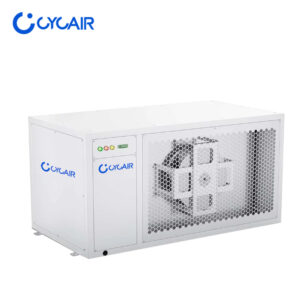
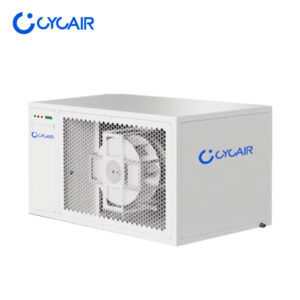
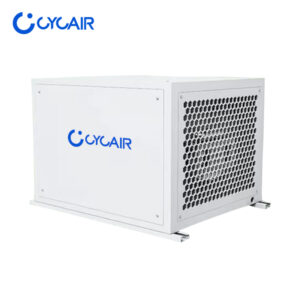
For commercial fresh air ventilation and energy recovery applications, Cycair offers CYCDF CA Series Commercial ERV Systems and CYCDF CAL Series Large Commercial ERV Systems.
The CYCDF CA Series is suitable for light commercial spaces such as offices, clinics, classrooms, shops, restaurants, and small public buildings.
The CYCDF CAL Series is designed for larger commercial buildings and higher airflow requirements, including schools, hotels, gyms, shopping areas, public halls, and large commercial HVAC ventilation projects.
For projects that need filtered fresh air supply without energy recovery, CYCSFP FA Series Filtered Fresh Air Supply Fans can also be considered.
Commercial ERV systems are suitable for:
The right product should be selected based on airflow demand, building layout, and installation requirements.
A normal ventilation fan moves air in or out of a space. An ERV supplies fresh air and exhausts stale air while recovering energy from the exhaust air.
Yes. Commercial ERV systems are suitable for offices because they provide fresh air ventilation while helping reduce energy loss.
The right size depends on building area, occupancy, required airflow, duct design, and operating conditions. A project-based selection is recommended.
If you are planning a fresh air ventilation system for an office, school, clinic, hotel, restaurant, or commercial building, Cycair can help recommend a suitable ERV solution.
Share your building type, area, airflow requirement, and installation conditions, and our team will help select the right commercial ERV system.