
Cannabis cultivation requires different humidity strategies at different stages. While early growth needs a supportive environment for plant development, the later stages require more precise and stable humidity control.
Flowering, drying, and curing are especially important because they are closely related to final crop quality and production consistency. At these stages, humidity control should be planned carefully instead of treated as a secondary issue.
A well-designed dehumidification system helps growers maintain a stable indoor environment and better manage moisture during these critical stages.
During flowering, plants are larger and the canopy is denser. Moisture production increases, and the grow room becomes more sensitive to humidity fluctuation.
After harvest, drying and curing require controlled environmental conditions. These stages are not simply about removing moisture as fast as possible. They require balanced humidity and airflow to support consistent results.
The goal is stable control, not aggressive drying.
The flowering stage is one of the most important periods for humidity control in cannabis cultivation.
At this stage:
A suitable dehumidifier should provide enough moisture removal capacity and stable airflow to support the flowering environment.
Commercial flowering rooms often require stronger dehumidification than vegetative rooms because plant mass and moisture load are higher.
Drying rooms require careful humidity management. Too much moisture can make the drying process unstable, while excessive or uneven moisture removal may affect consistency.
A drying room dehumidifier should help maintain a controlled environment over time. The equipment should operate reliably, maintain stable humidity, and support proper air movement.
Important equipment requirements include:
Curing is a quality-focused process. At this stage, the goal is environmental stability.
Even if the space does not need very high moisture removal capacity, it still needs accurate humidity control and stable operation. Sudden humidity changes can affect consistency.
For curing rooms, equipment selection should focus on stable control, reliability, and proper integration with the overall environmental system.
Standard residential dehumidifiers are usually designed for comfort spaces. They are not always suitable for flowering rooms, drying rooms, or curing rooms.
Commercial cultivation facilities may require:
This is why grow room applications often require dedicated commercial dehumidifiers.
For flowering, drying, and curing applications, a suitable dehumidifier should include:
The unit should match the room’s moisture load and maintain target humidity without excessive fluctuation.
Airflow helps reduce uneven humidity distribution and supports room-wide moisture control.
Long operating hours make energy performance important.
Integration with systems such as TrolMaster or Honeywell allows humidity control to work with the overall grow room environment.
Visual status indicators and fault detection can help reduce downtime.
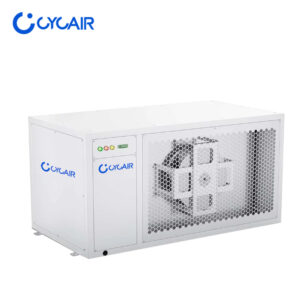
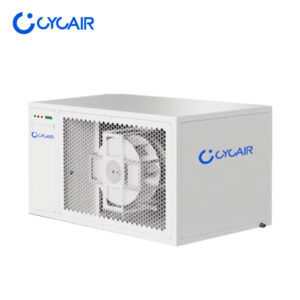
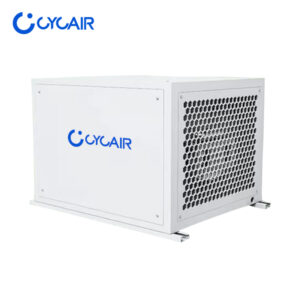
For these applications, Cycair offers the DGR-A Series Commercial Grow Room Dehumidifiers. The series includes DGR-A210P, DGR-A380P, DGR-A500P, and DGR-A750P, covering different grow room and drying room scales.
For medium and large flowering or drying rooms, models such as DGR-A380P, DGR-A500P, and DGR-A750P can be considered depending on room size, moisture load, and control requirements.
The series supports EC fan technology, MERV 13 filtration, third-party controller connection, and Cycair CAC-T LCD Controller options.
During flowering, plants are larger and release more moisture. Stable humidity control helps maintain a more consistent growing environment.
Yes. Drying rooms need controlled and stable moisture removal. The goal is not only fast dehumidification, but consistent environmental management.
It depends on the room size, moisture load, and operating conditions. A professional recommendation is needed for proper selection.
If you are designing a flowering room, drying room, or curing room, Cycair can help recommend a suitable humidity control solution.
Share your project details and our team will help you select the right grow room dehumidifier configuration.